
Self-care practices for emotional healing help people feel safe inside again. Emotional pain often grows slowly. It comes from stress, loss, or feeling ignored. When feelings stay inside, they affect sleep, mood, and focus. They can also affect the body. Emotional self-care helps break this cycle. Simple self-care routines support emotional well-being and steady the mind. You do not need big changes. Small daily habits can help emotional healing feel possible. Journaling, rest, and quiet moments build emotional balance over time. These practices support emotional health in gentle ways. When you learn how to heal emotionally, life feels less heavy. You feel more present. You also feel more in control of your emotions.
What Is Emotional Healing?
Emotional healing means learning how to care for your feelings after pain or stress. It is not about forgetting the past. It is about understanding what hurt you and finding calm again. With time and care, emotional healing helps you feel steady, safe, and more like yourself.
Emotional Healing Explained in Simple Words
Emotional healing is the process of feeling better inside. It happens when you face emotional pain instead of pushing it away. Pain can come from loss, stress, fear, or broken trust. When these feelings stay inside, they affect emotional health. Healing starts when you notice your emotions and allow them to exist. Emotional self-care helps you listen to your inner needs. Simple actions like rest, quiet time, or journaling can support emotional recovery. You do not need to rush. Healing moves at its own pace. Small steps matter.
Why Emotional Wounds Need Care
Emotional wounds do not heal on their own. When ignored, they often grow stronger. Unhealed pain can lead to emotional stress, low mood, or burnout. It can affect sleep, focus, and relationships. Caring for emotional wounds supports emotional well-being and balance. Self-care routines help calm the nervous system and reduce emotional overload. They also build emotional resilience over time. When you care for your emotions, you create space to feel safe again. This makes daily life easier to handle.
Emotional Healing Is a Personal Process
Emotional healing looks different for everyone. What helps one person may not help another. Some people heal through self-reflection. Others heal through connection or rest. There is no right or wrong way. What matters is staying kind to yourself. Healing emotional pain takes patience. With steady self-care habits, emotional health can slowly improve. You begin to feel lighter, calmer, and more in control of your emotions.
Why Self-Care Matters for Emotional Healing
Self-care plays a key role in emotional healing. It helps you slow down and notice how you feel. When emotions get daily care, they feel less heavy. Self-care routines give your mind and body time to reset. This support makes emotional healing feel safer and more possible over time.
How Daily Habits Affect Emotional Health
Daily habits significantly impact emotional health more than most people realize
. Poor sleep, high stress, and no breaks can drain emotional energy. Over time, this leads to emotional stress and burnout. Simple self-care habits can change this pattern. Small acts like regular rest, mindful breathing, or quiet time help calm the mind. These habits support emotional balance and emotional well-being. When your days feel steadier, emotional recovery becomes easier. You do not need perfect routines. You only need habits you can keep.
Self-Care Creates Space for Emotional Healing
Emotional healing needs space. Without it, emotions stay trapped. Emotional self-care gives feelings room to surface and pass. This can happen through journaling, self-reflection, or mindful pauses. These moments help you understand emotional pain instead of avoiding it. Over time, this builds emotional awareness and strength. Healing emotional pain works best when you feel safe with your feelings. Self-care helps create that safety.
Signs You May Need Emotional Self-Care
Many people ignore early signs of emotional strain. You may feel tired all the time. Small things may upset you more than usual. Sleep may feel broken. Focus may feel hard. These signs often point to unmet emotional needs. Daily emotional self-care can help restore balance. It supports emotional health before problems grow bigger. When you listen early, healing feels gentler and more natural.
Simple Self-Care Practices for Emotional Healing
Simple self-care practices for emotional healing help you feel steady again. They support emotional health in quiet ways. These practices do not fix everything at once. They help you cope better each day. When done often, they build emotional balance and support long-term emotional well-being.
Practicing Self-Awareness and Emotional Check-Ins
Self-awareness is the basis of emotional healing. It means noticing how you feel without judgment. Many people ignore their emotions to stay busy. This often makes emotional pain worse. A short daily check-in can help. Pause for a minute. Ask yourself how you feel. Name the emotion in simple words. This builds emotional awareness. Over time, it helps you manage emotional stress with more care. You start to understand your emotional needs better.
Journaling to Release Emotional Stress
Journaling is a safe way to release feelings. You do not need perfect words. Write what feels heavy. Write what feels confusing. This practice helps with emotional recovery by clearing the mind. Journaling supports self-reflection and emotional healing. Even five minutes can help. It allows emotions to move instead of staying stuck. Many people feel lighter after writing. It is a simple habit with strong emotional support.
Mindful Breathing and Relaxation Exercises
Mindful breathing helps calm the body fast. Slow breaths tell the nervous system that it is safe. This reduces emotional overload. Relaxation exercises like gentle stretching or quiet sitting also help. These practices support emotional balance and stress relief. You do not need long sessions. Short breaks work well. Over time, breathing and relaxation improve emotional resilience.
Setting Healthy Boundaries Without Guilt
Boundaries protect emotional health. Without them, emotional stress builds up. Saying yes too often can lead to burnout. Healthy boundaries help you save emotional energy. They support emotional well-being and self-respect. Setting limits may feel hard at first. It gets easier with practice. Clear boundaries reduce emotional pain and improve daily life.
Getting Enough Rest and Quality Sleep
Rest plays a big role in emotional healing. Poor sleep affects mood and focus. It also lowers emotional strength. Quality sleep supports emotional recovery and balance. Simple routines help. Go to bed at the same time. Limit screens before sleep. Even small changes can improve emotional health. When the body rests, emotions heal better, too.
Self-Care Practices That Support Long-Term Healing
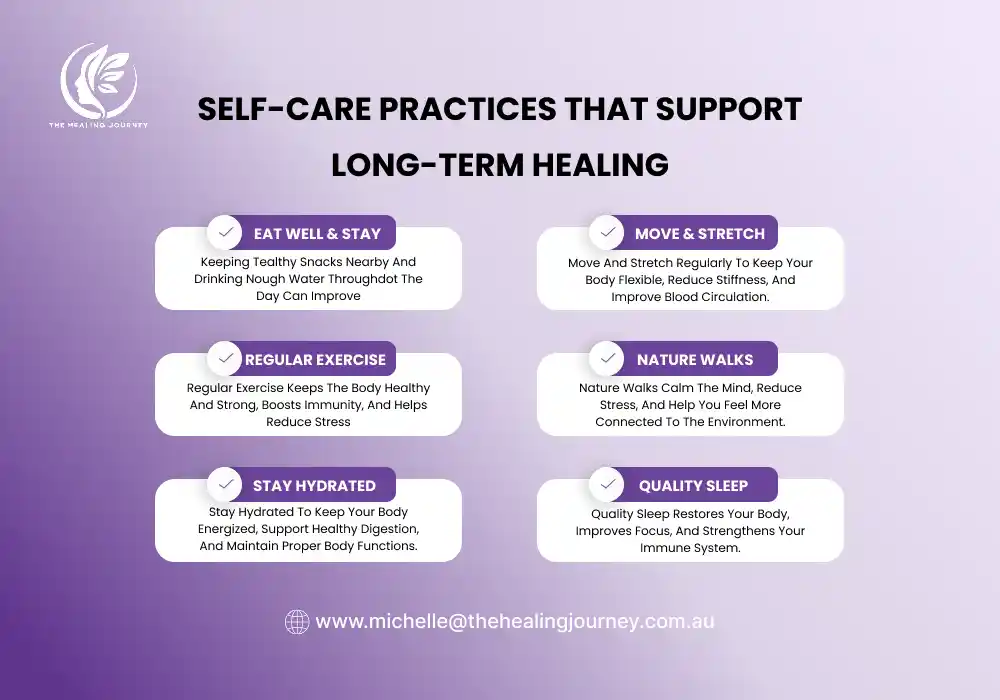
Self-care practices that support long-term healing go beyond quick fixes. They help emotional health grow slowly and steadily. These practices make emotional recovery stronger and lasting. When done consistently, they create emotional balance and resilience. Long-term habits help you handle stress without feeling overwhelmed.
Building a Gentle Daily Routine
A gentle daily routine helps emotional healing stay on track. It includes small, simple habits that support emotional well-being. You can start by waking up at the same time, eating meals mindfully, and taking short breaks. Routine does not mean rigid schedules. It means creating space for emotional care every day. This helps your mind and body feel steady. Emotional recovery becomes easier when your day has predictable moments of calm.
Connecting with Supportive People
Humans heal faster with support. Emotional self-care includes spending time with people who listen and care. Friends, family, or support groups can offer understanding without judgment. Talking about feelings helps emotional recovery. Even small moments of connection reduce emotional stress and improve emotional resilience. Surround yourself with people who lift you, not drain you.
Limiting Emotional Triggers and Burnout
Long-term healing also involves protecting yourself from emotional triggers. Stressful news, toxic relationships, or overwhelming responsibilities can block emotional recovery. Setting boundaries and taking breaks is part of emotional self-care. Avoid burnout by pacing yourself. Emotional balance grows when you know when to say no and when to step back.
Practicing Consistency and Patience
Healing emotional pain does not happen overnight. Long-term self-care requires patience and gentle consistency. Small daily habits like mindful breathing, journaling, or healthy rest slowly improve emotional well-being. Over time, these practices build emotional resilience and make life feel lighter. Emotional health becomes stronger, and coping with stress becomes easier.
Common Mistakes to Avoid During Emotional Healing
Emotional healing is a personal journey. Many people make mistakes that slow down recovery without realizing it. These mistakes can create more emotional stress and block emotional balance. Being aware of them helps emotional self-care work better.
1. Ignoring Your Feelings
- Pushing emotions away makes emotional pain grow quietly over time.
- Unprocessed feelings can affect sleep, focus, and mood.
- Acknowledging and naming emotions is a key step in emotional healing.
2. Expecting Fast Results
- Emotional recovery takes time and steady effort.
- Self-care routines work gradually, not overnight.
- Small, consistent steps matter more than quick fixes.
3. Comparing Your Healing Journey to Others
- Every healing journey moves at a different pace.
- Comparisons weaken emotional well-being and confidence.
- Focusing on your own progress builds emotional resilience.
4. Neglecting Self-Care Habits
- Skipping self-care allows emotional stress to build fast.
- Short daily habits help maintain emotional balance.
- Consistency is more important than doing everything perfectly.
By avoiding these mistakes, emotional healing becomes smoother and more effective. You allow your emotions to breathe, recover, and settle. This creates space for real healing, steady emotional balance, and stronger emotional resilience that supports you in daily life.
When to Seek Professional Support in Self-Care Practices for Emotional Healing
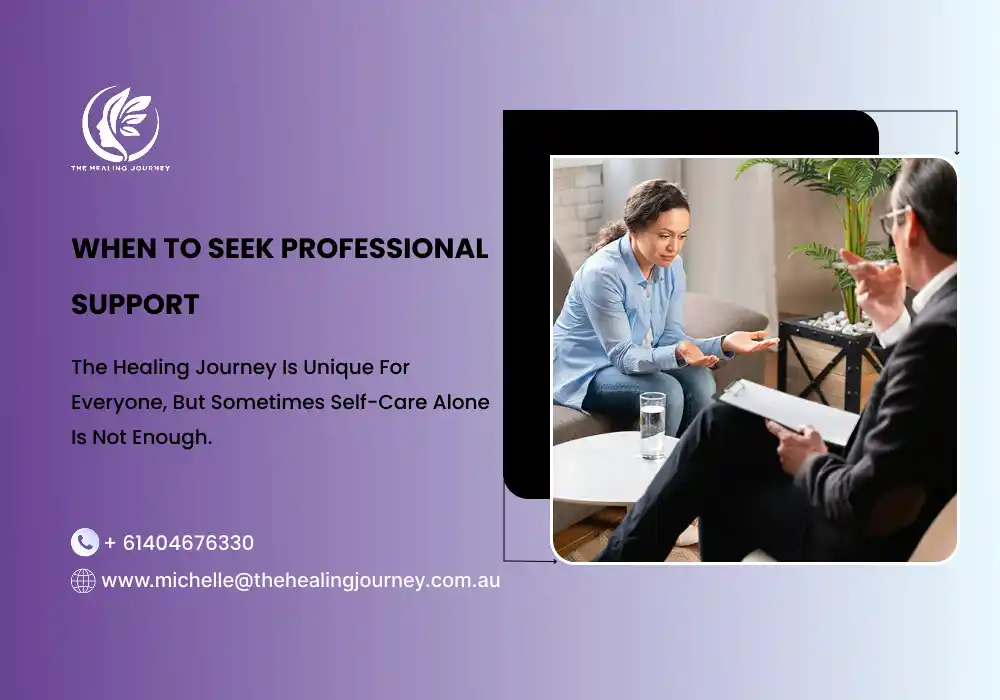
The healing journey is unique for everyone, but sometimes self-care alone is not enough. Seeking professional support does not mean you are weak. It means you are serious about your emotional health. Therapists, counselors, and mental health professionals can guide you through emotional pain safely. Emotional self-care combined with professional help often leads to faster and more lasting emotional healing.
Signs Self-Care Is Not Enough
Sometimes, emotional stress feels too heavy to manage alone. You may notice constant sadness, anxiety, or mood swings. Sleep and focus may feel impossible. Emotional pain may affect your daily life or relationships. These are signs it’s time to seek support. Professional guidance can help you navigate these feelings and provide tools to build emotional resilience.
How Therapy Can Support Emotional Healing
Therapy provides a safe space for emotional recovery. Professionals can help you process past pain, manage stress, and create long-term self-care routines. Counseling also teaches coping strategies for emotional triggers and helps maintain emotional balance. When combined with simple self-care practices like journaling, mindful breathing, and gentle routines, professional support strengthens emotional well-being.
Take the Next Step in Your Healing Journey
You do not have to do this alone. The Healing Journey team is ready to help you start emotional recovery safely and effectively. Take a step today: Book Your Appointment orContact Us to learn more. Your emotional well-being matters, and help is available. Start your healing journey now and give yourself the care you deserve.
Final Thoughts
Self-care practices for emotional healing are simple but powerful. They help you understand your feelings, release stress, and build emotional balance. Healing emotional pain takes time, patience, and small, consistent habits. Journaling, mindful breathing, rest, and healthy boundaries all support emotional well-being.
Everyone’s healing journey is different. Some progress quickly, others slowly. What matters is taking steady steps and listening to your emotions. Combining self-care with professional support can make the journey safer and more effective. Emotional resilience grows when you care for yourself every day.
You deserve to feel calm, balanced, and in control of your emotions. Start with small steps today and keep them consistent. Self-care is not a luxury—it’s a vital part of emotional healing. Begin your journey today and give yourself the care you need to feel whole again.
Frequently Asked Questions (FAQs)
Here are answers to some common questions about self-care practices for emotional healing. These help you understand the process better and guide you on your healing journey.
How long does emotional healing take?
Emotional healing is different for everyone. Some people notice small improvements in weeks. Others take months or even longer. Healing is not about rushing. It happens gradually with consistent self-care habits, emotional awareness, and, if needed, professional support.
Can self-care really heal emotional pain?
Yes, self-care is a powerful part of emotional healing. Simple routines like mindful breathing, journaling, rest, and healthy boundaries support emotional well-being. They help you manage stress, improve emotional balance, and build resilience over time. Self-care does not replace therapy if needed, but it strengthens emotional recovery.
What if self-care feels hard to start?
Starting small is key. Even five minutes of journaling or deep breathing counts. Focus on one habit at a time. Be patient with yourself. Emotional healing grows with consistent, gentle steps. Over time, self-care becomes natural and easier to maintain.
How do I know if I need professional support?
If emotional pain affects sleep, focus, relationships, or daily life, it’s a sign to seek help. Professional guidance can provide tools, coping strategies, and safe support for emotional recovery. Combining self-care with therapy often leads to stronger and faster emotional healing.
How can I maintain emotional balance long-term?
Consistency matters. Keep simple daily routines like mindful breaks, journaling, quality rest, and healthy connections. Limit emotional triggers and practice self-awareness. Over time, these habits strengthen emotional resilience and help maintain emotional well-being.
2 Responses